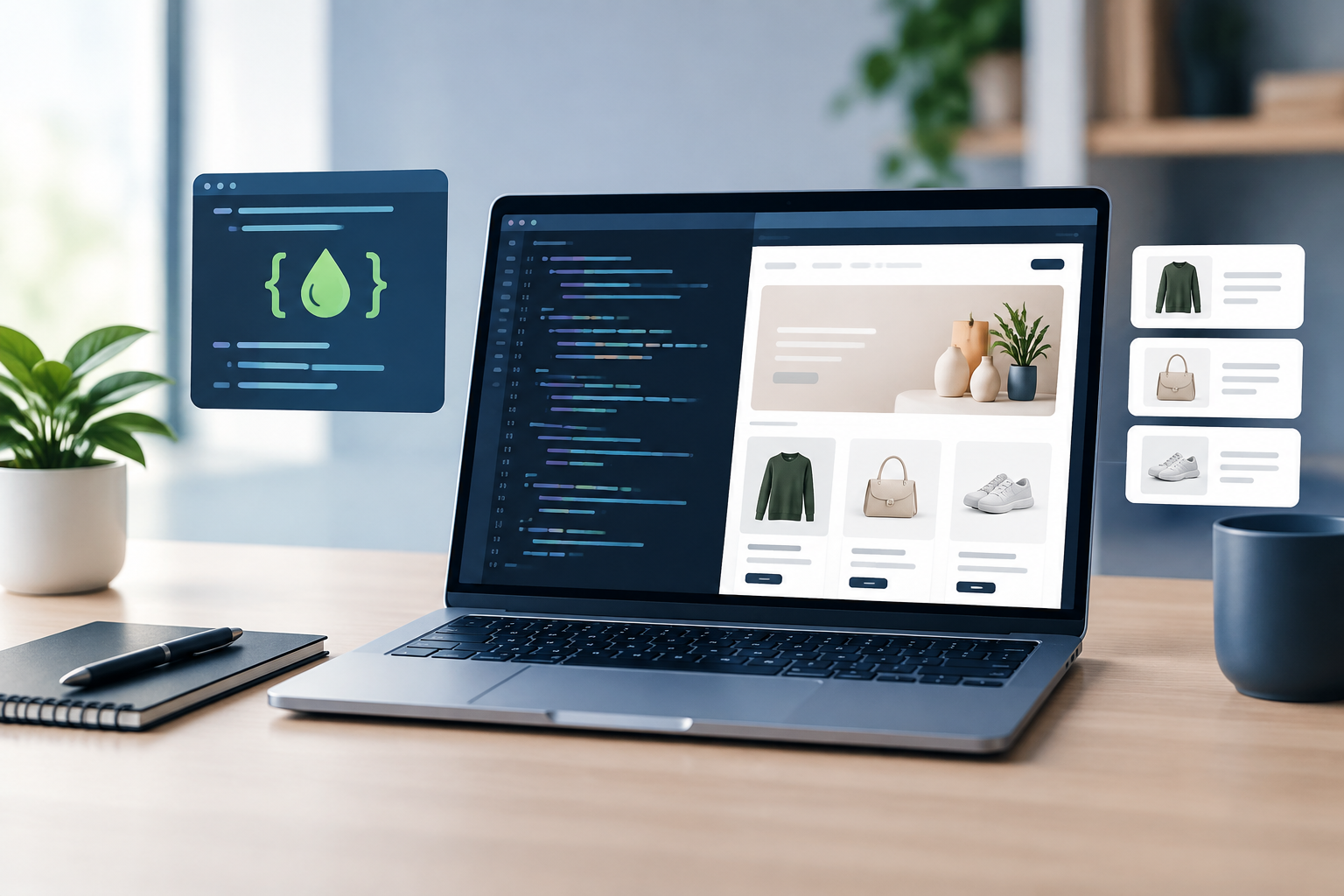

Shopify Liquid customization gives store owners more control over how their storefront looks, behaves, and presents products. While Shopify themes provide a strong foundation, many businesses need experiences that go beyond standard settings. Liquid makes it possible to adapt theme templates and display dynamic content without rebuilding an entire store from scratch.
This guide explains what Shopify Liquid is, where it can be used, and how businesses can approach customization safely and effectively.
What Is Shopify Liquid?
Liquid is Shopify’s template language. It connects a theme’s code with store data, such as products, collections, customers, cart contents, and settings. Liquid uses objects, tags, and filters to determine what content appears on a page and how that content is presented.
For example, a theme can use Liquid to display a product title dynamically:
{{ product.title }}In this example, product is an object and title is one of its properties. The value changes automatically depending on the product being viewed.
Liquid does not replace HTML, CSS, or JavaScript. Instead, it works alongside them. Liquid controls dynamic output, while HTML structures the page, CSS controls appearance, and JavaScript can add interactive behavior.
Why Businesses Customize Shopify Liquid
Standard theme settings are useful for making basic changes, but they may not support every business requirement. Liquid customization can help a store create a more relevant and consistent shopping experience.
- More flexible layouts: Add or reposition content that is not available through the theme editor.
- Dynamic product information: Show content based on product type, collection, tags, or metafields.
- Stronger merchandising: Highlight specific products, promotions, or buying guidance.
- Improved brand consistency: Match the storefront more closely to established brand guidelines.
- Better customer guidance: Add sizing information, care instructions, trust messaging, or delivery details in relevant locations.
For businesses planning broader improvements, an internal link to a relevant Shopify development services page can help visitors explore professional support options.
Common Shopify Liquid Customization Areas
Product Pages
Product pages are one of the most common places for Liquid customization. A business might want to show different information depending on the product being viewed.
For example, a store could display a message for products with a specific tag:
{% if product.tags contains 'featured-care' %}
  <p>Includes detailed care instructions with your order.</p>
{% endif %}
This approach can be useful for apparel, beauty products, electronics, furniture, and other categories where customers need additional buying information.
Liquid can also be used to display product metafields. Metafields allow businesses to store structured information beyond standard product fields, such as materials, dimensions, ingredients, technical specifications, or warranty details.
Collection Pages
Collection templates can be customized to provide more context around a product group. A store might display a category introduction, a buying guide, or a promotional message only for selected collections.
{% if collection.handle == 'office-chairs' %}
  <p>Compare ergonomic features before choosing your office chair.</p>
{% endif %}
When used carefully, conditional content can make collection pages more helpful without repeating the same message across the entire site.
Navigation and Header Sections
Liquid can support navigation-related adjustments, such as showing a special announcement, adding a secondary message, or changing content based on the current template. Header changes should be tested carefully because the header appears across many pages and can affect mobile usability.
Cart and Checkout-Related Experiences
Businesses often use Liquid to improve the cart experience by displaying free-shipping thresholds, product recommendations, or relevant notices. A simple cart message might be based on the current cart total:
{% if cart.total_price < 5000 %}
  <p>Add more items to qualify for free shipping.</p>
{% else %}
  <p>Your order qualifies for free shipping.</p>
{% endif %}
Shopify’s available checkout customization options depend on the store setup, plan, and current Shopify capabilities. Before changing checkout-related functionality, confirm which extension points and permissions are available.
Using Conditions, Loops, and Filters
Three Liquid features are especially important for theme customization.
Conditions
Conditions use statements such as if, elsif, and unless to control when content appears. They are useful for product tags, templates, collection handles, customer states, and other business rules.
Loops
Loops repeat an action for a group of items. For example, a theme can loop through products in a collection or display several related links. Loops should be structured carefully to avoid showing too much content or affecting page performance.
Filters
Filters modify or format Liquid output. Common uses include formatting prices, changing text case, creating image URLs, and converting values into readable formats.
{{ product.price | money }}The correct filter depends on the type of data being displayed. Testing is important because an incorrectly formatted value can create confusing storefront output.
Shopify Theme Files Commonly Used for Liquid Changes
The exact file structure varies between themes, especially between older themes and Online Store 2.0 themes. However, several areas are commonly involved:
- Templates: Define the structure used for product, collection, page, blog, and other page types.
- Sections: Create reusable, configurable areas that can often be arranged in the theme editor.
- Snippets: Store smaller reusable pieces of Liquid, HTML, or related code.
- Layout files: Provide the broader page structure, including elements such as the header and footer.
- Assets: Contain CSS, JavaScript, images, and other theme resources.
Before editing a live theme, duplicate it and work on the copy. This gives the team a rollback option if a change creates a visual, functional, or compatibility issue.
Best Practices for Safe Liquid Customization
Start With a Clear Requirement
Define what the customization should achieve before changing code. “Improve the product page” is too broad. A stronger requirement might be “show material and care information below the product description for products that have those metafields.”
Use Reusable Sections and Snippets
Reusable code is easier to maintain than repeated code copied into several templates. If the same promotional message or product information block appears in multiple places, consider creating a snippet or section.
Keep Business Rules Manageable
Long chains of nested conditions can become difficult to understand. Where possible, use metafields, theme settings, or structured data instead of hardcoding many product handles and one-off exceptions.
Protect Performance
Liquid customization can affect page output and loading behavior. Avoid unnecessary loops, repeated data lookups, oversized images, and scripts that load on every page when they are only needed in one location.
Test Across Devices and Templates
Test changes on desktop and mobile devices, as well as across relevant product types, collections, customer states, and page templates. A customization that works on one product may fail when a metafield is empty or a product has different variants.
Common Mistakes to Avoid
- Editing the live theme without creating a backup.
- Hardcoding content that staff need to update regularly.
- Assuming every product has the same metafields or available values.
- Adding custom code without checking how it interacts with the theme editor.
- Using too many conditional rules for content that could be managed through structured settings.
- Ignoring accessibility, especially for headings, buttons, images, and interactive elements.
- Failing to document what was changed and why.
When to Hire a Shopify Developer
Simple text changes may be manageable for a confident store administrator, but more complex customization can require theme development experience. Professional help is particularly useful when changes involve multiple templates, metafields, custom sections, third-party apps, performance concerns, or advanced JavaScript.
A developer can also review existing theme code, identify conflicts, and create a maintainable solution rather than adding another isolated patch. This is especially valuable for stores that rely on frequent merchandising updates or have several teams working on the storefront.
Build a More Flexible Shopify Store
Shopify Liquid customization can turn a standard theme into a storefront that better reflects a business’s products, customers, and operational needs. The best results come from clear requirements, reusable code, structured content, and careful testing.
If your store needs custom sections, dynamic product information, or a more tailored shopping experience, contact Sarrloop to discuss your requirements and explore a practical Shopify development approach. Insert promotional link here
For related guidance, consider linking this article to your Shopify theme development guide, ecommerce website services page, or website performance optimization resource.
Related: E-Commerce Customization: How to Build a Store That Converts and Scales
Related: JavaScript Development for Modern Businesses: Build Faster, Scalable Web Experiences
Related: API Integration for Businesses: A Practical Guide to Connected Systems
Need help with your website?